


Why put down the spade?
There is a moment in every kitchen gardener’s year when the seed catalogues arrive, the light returns, and the urge to dig becomes almost irresistible. But if you are starting a new vegetable patch on tired lawn, compacted clay or a weed-ridden corner, you do not need to break your back. No-dig gardening works with the soil rather than against it. Instead of turning the ground over, you smother what is there, feed the surface, and let worms and fungi do the heavy lifting. The result is a bed that is ready to plant almost immediately, with fewer weeds and a soil structure that improves year after year.
Choosing a spot that works for you
Before you order a pallet of compost, spend ten minutes watching the light. Most vegetables want at least six hours of direct sun, so avoid the shadow of a shed, hedge or mature tree. A gentle slope is fine; a boggy hollow is not. Keep the bed close to the kitchen door if you can, because the best garden is the one you visit daily with a colander in hand.
Mark out a rectangle no wider than 1.2 metres. Any wider and you will be tempted to step on the bed, which compacts the very soil you are trying to protect. Length is up to you, but a 3-metre bed fits neatly into most gardens and gives you room for a proper crop rotation. If you are starting on grass, simply mow it short and leave the clippings in place. For perennial weeds such as docks or couch grass, cut them back hard first; the cardboard will do the rest.
The layers that make a bed
The no-dig method is simply a lasagne of organic matter. Each layer has a job. You will need:
- Cardboard: plain, brown corrugated card, with tape, staples and glossy labels removed. Save delivery boxes and ask local shops for more.
- Well-rotted manure: horse or cow, at least a year old, dark and crumbly with no smell of ammonia. Fresh manure will burn roots and attract flies.
- Compost: homemade if you have it, or a peat-free multipurpose or soil conditioner. Leafmould is excellent too.
- Optional toppings: a thin layer of garden compost, spent mushroom compost or seaweed meal for trace elements.
As a rough guide, a 3 by 1.2 metre bed needs about 12 to 15 square metres of cardboard, 100 litres of compost and 100 litres of manure, though more is never wasted. The cardboard should overlap by at least 15 centimetres so weeds cannot sneak through the joins. Soak each sheet in a bucket or water it thoroughly after laying; dry cardboard repels water and will stay dry for months.
Building the bed, step by step
Start by clearing any obvious rubbish, stones or thick woody stems. Do not bother removing every dandelion; the darkness beneath the card will see them off. Lay the soaked cardboard over the whole area, overlapping the edges and extending it 10 centimetres beyond your intended bed. If the ground is very uneven, stamp it down gently so there are no air pockets.
Now spread the compost over the cardboard, followed by the well-rotted manure. Mix them together lightly with a fork or just leave them in alternating layers; either way, the worms will blend them. Aim for a total depth of 10 to 15 centimetres. If you are building in autumn, you can leave the bed to settle over winter and plant in spring. If you are building in spring, you can plant the same day.
To plant, simply pull back the mulch with your hands, cut a cross or circle in the cardboard with a knife, and tuck your seedling or seed potato into the soil below. Firm it in gently and pull the mulch back around the stem. For seeds, sow into a pocket of compost on top of the cardboard, or raise transplants in modules and plant through as above. Water well for the first fortnight.
What to grow in your first no-dig year
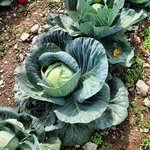
Almost anything thrives, but some crops are especially grateful. Courgettes, pumpkins and squashes love the rich, moisture-retentive mulch. Climbing and dwarf beans, peas and sweet peas can be sown straight into the surface compost. Brassicas—cabbages, kale, broccoli—appreciate the firm ground below and the weed-free start. Salad leaves, radishes, beetroot and chard are quick and forgiving. Potatoes can be planted through the card with a trowel, though maincrop varieties may need a little extra compost as they grow.
Slugs and snails will investigate the damp cardboard edges. Go out with a torch after rain, or scatter wool pellets or nematodes according to the label. Keep the bed mulched with grass clippings, straw or more compost as crops grow; this feeds the soil and keeps moisture in during dry spells.
Keeping the no-dig bed productive
After harvest, do not dig. Pull out old roots, leave the soil undisturbed, and top up with a 5-centimetre layer of compost or manure each autumn. Rotate your crops in broad groups—legumes, brassicas, roots, potatoes—to avoid disease and keep the soil balanced. A winter mulch of leaves or straw protects the surface from rain damage and gives worms a larder.
By the second year, the cardboard will have vanished, the soil will be dark and crumbly, and weeds will be a fraction of what they were. You will find yourself reaching for a trowel rather than a spade, and the kitchen will fill with earthy, honest food: roasted roots, a bowl of courgette soup, a handful of herbs torn over potatoes. That, to me, is the real reward of a no-dig plot—less effort, more supper.




John Doe
14 January, 2022Having no content in post should have adverse..
Chauffina Carr
10 April, 2022We use these tests all time! Killer stuff!
Jim Séchen
16 July, 2022Thanks for all the comments, everyone!